Back to the Main page
Healthcare Mobile App
Overview
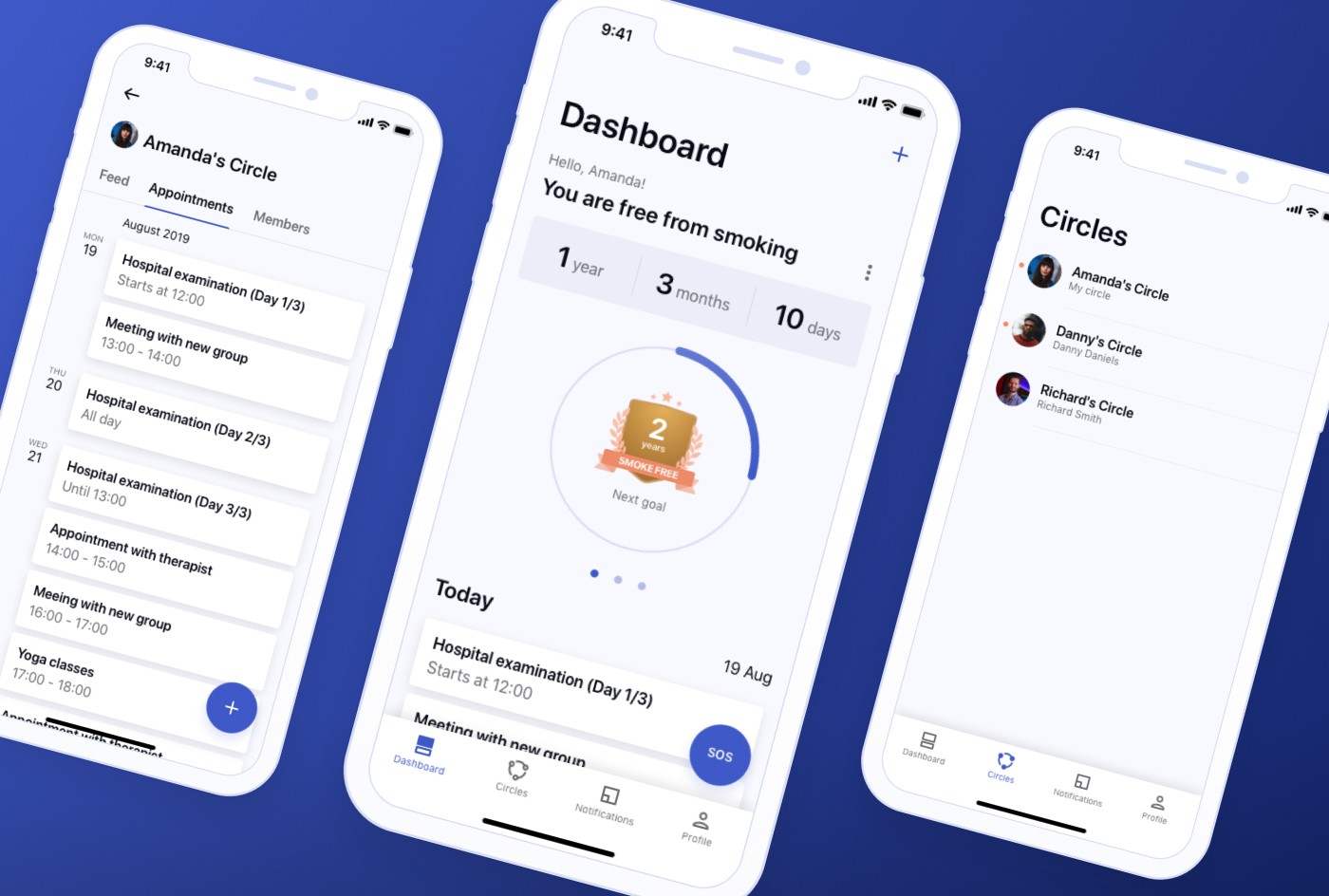
The Healthcare Mobile App for Addiction Recovery is a cross-platform mobile app designed for iOS and Android. It empowers individuals battling addiction by providing tools to maintain sobriety, track progress, and connect with a trusted support network. The app’s user-centered design focuses on simplicity, usability, and meaningful support, addressing the unique challenges of addiction recovery.
Timeframe: 1 months
Team: UX Designer/2 Mobile Developers, 1 Back-End Developer, QA, PM
Platform: iOS and Android Apps
Industry: Healthcare, B2C
The Challenge
Addiction recovery is a daily battle. Traditional support systems—therapy appointments, support group meetings, rehab programs—are invaluable, but they share a critical flaw: they're not available at 2 AM on a Tuesday when cravings hit hardest.
Our client, a healthcare provider specializing in addiction treatment, came to us with a clear mission: create a mobile app that fills the gaps between professional care. They needed something that could:
Provide immediate support during crisis moments
Help users maintain accountability through their recovery journey
Offer structured tools that complement professional treatment
Work seamlessly on iOS and Android
But here's what made this project uniquely challenging: we couldn't talk directly to end users. The sensitive nature of addiction meant that recruiting people in active recovery for research would be ethically complex and potentially harmful.
My Role & Collaboration
Senior UX Designer leading the end-to-end design process — from research strategy through final implementation. I worked alongside a product manager, healthcare stakeholders, and a development team.
Research and Insights
Without the ability to conduct traditional user interviews, I had to get creative. I built a three-pronged research strategy that would give us deep insights without putting vulnerable individuals at risk.
Secondary research
I conducted extensive secondary research by analyzing articles, reports, and online forums focused on addiction recovery. This helped me understand key challenges faced by individuals in recovery and common triggers for relapse.
Stakeholders Workshops
Collaboration with healthcare experts was essential. Our stakeholders, who work closely with individuals battling addiction, provided valuable insights directly from their patients. This allowed me to ground the design in real-world experiences and ensure the app’s features aligned with actual user needs.
Competitors analysis
I evaluated existing addiction recovery and mental health support apps to identify best practices and avoid common design pitfalls. This research helped me integrate familiar UX patterns while ensuring the app was both innovative and user-friendly.
Problem Statement
People recovering from addiction need immediate access to support, structured recovery tools, and a sense of accountability. However, existing solutions often lack accessibility, emotional support, and ease of use, making it harder for individuals to stay committed to their recovery journey.
Design process
Ideation & Prototyping
Working closely with stakeholders, we brainstormed potential features and prioritized those with the highest impact:
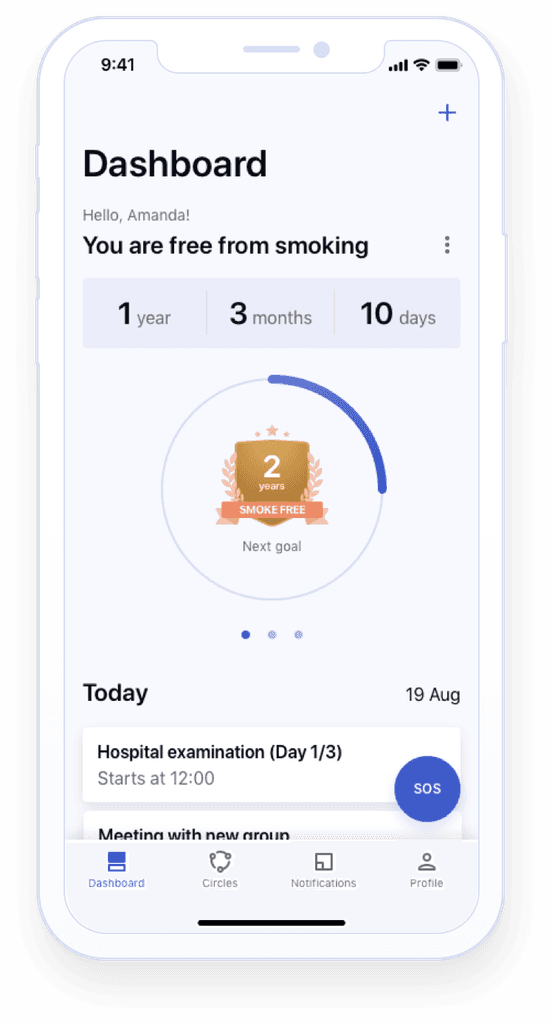
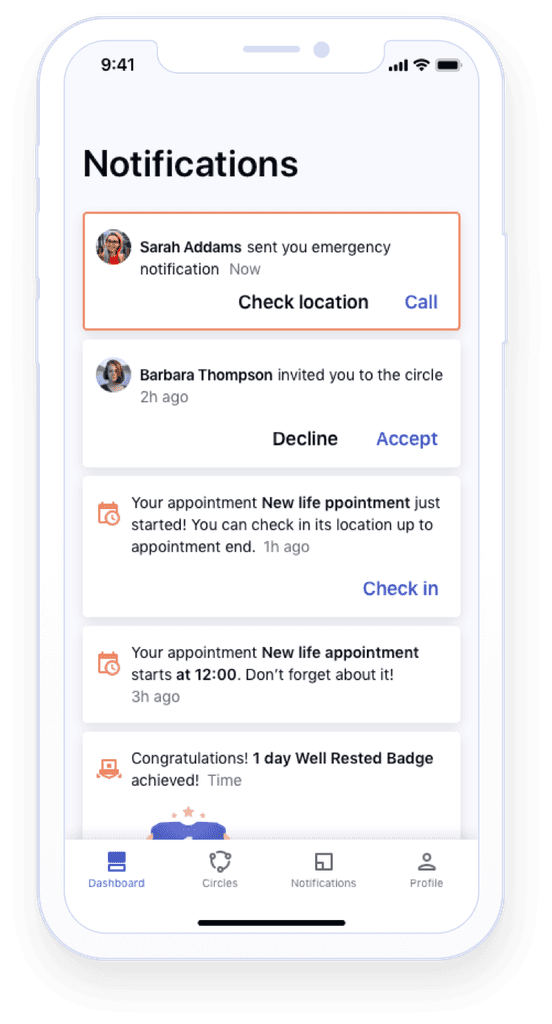
Emergency Button: A one-tap feature to quickly contact a trusted individual during crises.
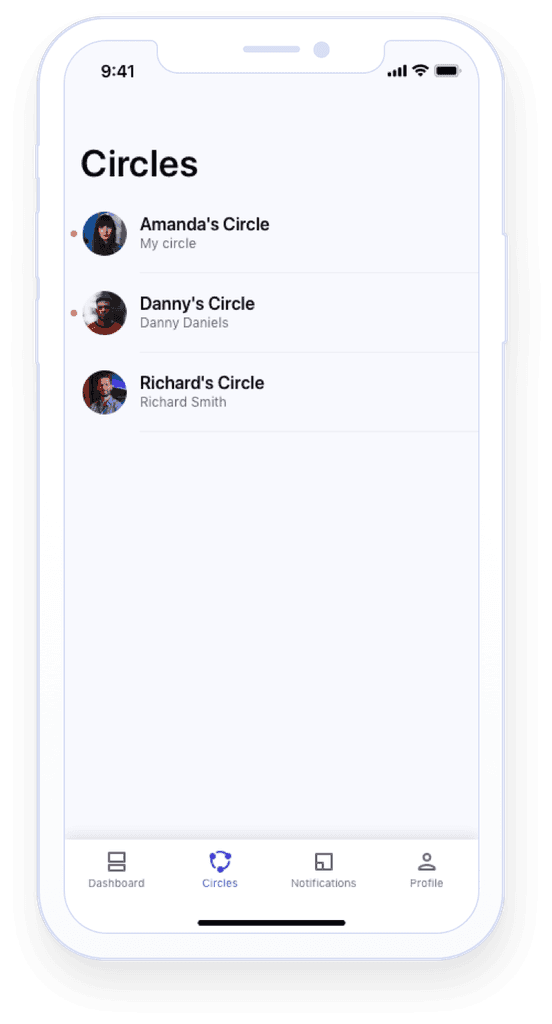
Circles: A support group functionality that enables users to stay connected with trusted individuals.
Care Plans: Personalized recovery plans developed by healthcare professionals.
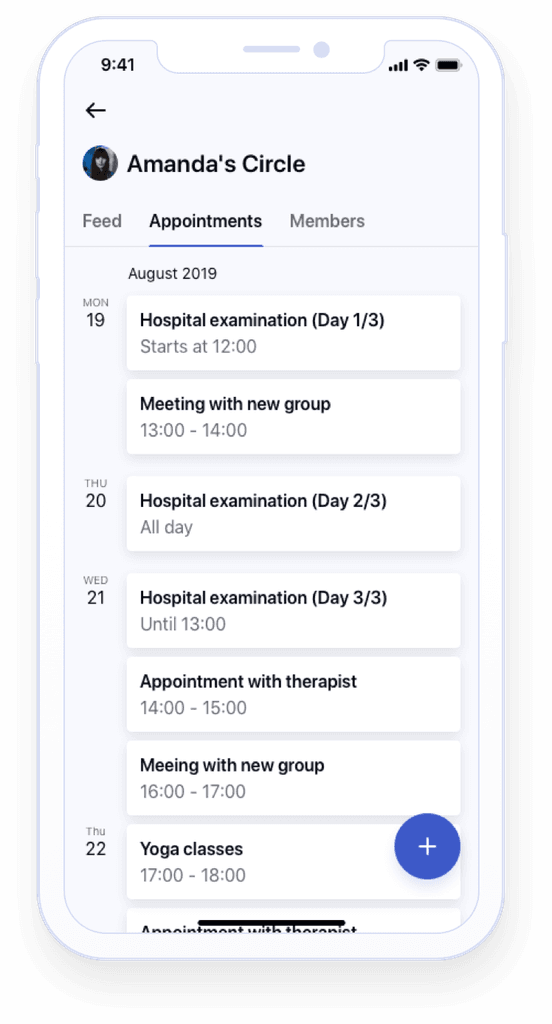
Calendar Integration: Tools for scheduling therapy sessions and reminders to stay on track.
Then I created prototypes and tested them with stakeholders.
Testing & Iteration
As I didn't have direct access to users I decided to test prototype with our stakeholders and they provided valuable feedback, leading to:
Improved accessibility for the Emergency Button, making it accessible from the lock screen.
Simplified navigation for ease of use during moments of distress.
A refined Circles feature to ensure clarity and encourage engagement.
I tracked key usability metrics:
Task Success Rate: 92% of participants in simulated scenarios successfully completed key tasks (e.g., initiating an emergency call, creating a support circle).
Time on Task: The average time to access the Emergency Button was reduced to 3 seconds, ensuring swift response during crises.
User Satisfaction Score (SUS): The app achieved a score of 84, indicating high usability and satisfaction.
Projected Retention Rate: 75%, based on usability testing feedback.
Impact
The final design successfully addresses key user needs by:
Providing Immediate Support: The Emergency Button ensures help is always accessible.
Fostering Accountability: Circles encourage connection and motivation through trusted networks.
Structuring Recovery: Personalized care plans and calendar tools help users stay on track.
Lessons Learned
Empathy is Key: Designing for addiction recovery requires deep empathy and collaboration with subject matter experts.
Alternatives to Direct User Research: When direct research is not possible, leveraging stakeholder insights and secondary research can be highly effective.
Simplicity Drives Engagement: Reducing complexity in design increases user engagement, especially for emotionally vulnerable users.
Next Steps
Accessibility Enhancements: Implement features for users with disabilities.
Post-Launch Testing: Gather real user feedback to refine features and identify new opportunities.
Healthcare System Integration: Expand functionality by integrating with healthcare providers for more personalized support.